Making Projects Bankable: Rail Concessions in Emerging and Frontier Markets
Railways in emerging and frontier markets have often been described as unbankable, and the record offers some support for that view.
Many of the first African rail concessions were terminated before the end of their term: Kenya ended the Rift Valley Railways concession on the Kenya–Uganda line in 2017, eleven years into a 25-year term, and Senegal and Mali ended Transrail’s Dakar–Bamako concession in 2015 (Otuki, 2017; Railway Gazette International, 2016). Most new lines have been financed on State balance sheets, including Kenya’s USD 3.6 billion Mombasa–Nairobi standard gauge railway and India’s dedicated freight corridors (CRISIL Ratings, 2025).
Where private capital has built new track, it has concentrated on lines with a single mining offtaker, as at Simandou in Guinea.
The record largely reflects how the first concessions were structured. Railways seldom fail on engineering grounds. They fail when demand risk is placed on parties that cannot carry it: a single anchor shipper, as on Mozambique’s Nacala corridor, which was sold together with the Moatize coal mine when Vale exited coal (Coal Age, 2021); a State entity that is in effect paying itself through another State entity, as on Kenya’s standard gauge railway, which carried 4.4 million tonnes in 2020 against a committed 6.0 million tonnes (Omondi, 2022); or a traffic forecast that no party has underwritten, as on the Kenya–Uganda line.
Projects succeed when demand risk is split, both between the project stakeholders and across multiple shippers, commodities and routes, and when a credible balance sheet stands behind whatever risk remains.
Diversified corridors are the most effective means of achieving that split, and the most reliable route to making rail projects bankable. On the Lobito corridor, Trafigura aggregates cargo from multiple mines in the DRC and Zambia, and the concessionaire reached financial close on USD 753 million of debt in June 2026 (Global Trade Review, 2026). A railway that serves several mines, a port, agricultural exports and the inbound trade that follows gives lenders several balance sheets to rely on, and reduces the share of demand risk that would otherwise fall on the State.
KEY TAKEAWAYS
- Making projects bankable in rail comes down to one question: which credible balance sheet stands behind the traffic.
- Demand risk has no natural owner. Its allocation follows directly from the revenue model.
- Diversified corridors such as Lobito and Maputo split demand risk across shippers, commodities and routes.
- Projects fail in six recognisable ways when risk is shifted onto parties that cannot carry it.
IN THIS ARTICLE
Concessions and the Allocation of Risk
A rail concession is a long-term contract under which the State retains ownership of a railway and grants a private company the right, and usually the obligation, to operate, maintain and invest in it for a fixed term, after which the assets revert to the State. The contract sets out each party’s responsibilities and risks so that performance and payment do not require continuous renegotiation (World Bank, 2017). Private participation ranges from management contracts and leases (affermage) to full concessions, and from build-operate-transfer schemes to co-ownership through joint ventures. Each arrangement allocates the six core risks in Table 1 differently, but the governing principle is constant: each risk should sit with the party best placed to manage and absorb its consequences (World Bank, 2017).
| Risk | Owner | Mitigations |
| Construction | Concessionaire (through its EPC contractor) | Fixed-price, date-certain EPC contract; sponsor completion support |
| Operations and maintenance | Concessionaire | Performance standards; maintenance reserve accounts; safety regulation |
| Political and regulatory | State | Government support and stabilisation agreements; political risk insurance |
| Interface (links to other infrastructure) | State | Interface agreements; compensation for force majeure delays |
| Financing | Concessionaire | Long-tenor development finance; interest rate and currency hedging; hard-currency revenue |
| Demand | No natural owner (allocated by the revenue model) | User tariffs; take-or-pay contracts; availability payments; revenue guarantees |
Demand risk has no natural owner, yet it determines whether a project can be financed more than any other risk. Its allocation follows directly from the revenue model. A user tariff leaves it with the concessionaire; a take-or-pay contract moves it to a shipper committed to minimum volumes; availability payments and revenue guarantees place it on the State; and track access charges pass it to train operators. In mature markets, dense and established traffic can itself serve as credit support. In emerging and frontier markets, lenders look for a party with a balance sheet.
Select a revenue model to see who carries demand risk under it.
User tariffs
Take-or-pay contracts
Availability payments
Revenue and patronage guarantees
Track access charges
The 264 km first stage of Etihad Rail was built to carry ADNOC’s sulphur from Shah and Habshan to the port of Ruwais. ADNOC was in effect the offtaker, and its guarantee – which carried step-in rights – turned what might have been a limited-recourse project financing into something closer to corporate debt (IJGlobal, 2014). The lenders were taking ADNOC credit risk in place of traffic risk on a new railway. The structure worked because a creditworthy offtaker was available. Most emerging and frontier markets have no equivalent of ADNOC, which raises the central question of this article: where does the balance sheet come from?
Who Carries Demand Risk in Emerging and Frontier Markets
In most emerging markets the State carries demand risk, even where private capital appears to control the project. China’s Hangzhou-Taizhou line was the country’s first high-speed railway with a private controlling shareholder: a Fosun-led consortium holds 51% of the CNY 44.9 billion PPP (China Daily, 2016). Local governments nonetheless subsidise its operation, and the line reverts to the government free of charge at the end of a 30-year franchise (China Daily, 2016; Railway Gazette International, 2018). Private capital controls the company; the State underwrites the traffic.
India’s Dedicated Freight Corridor Corporation of India Limited (DFCCIL) reaches the same outcome through a State-owned vehicle. Its debt, provided by JICA and the World Bank, is serviced from track access charges paid by the Ministry of Railways (CRISIL Ratings, 2025; ICRA, 2025). The debt is therefore underwritten by the ministry, and the access charge functions as a transfer within the State.
The Gulf States frequently go further and fund rail directly from the sovereign balance sheet. Saudi Arabia Railways spent several years negotiating a PPP for the Saudi Landbridge with a Chinese-backed consortium. The talks failed over local content requirements, and the programme will now be delivered in phases on the State’s balance sheet (MEED, 2026). Where capital is abundant and PPP terms cannot be agreed, the State reverts to direct funding.
India also offers a model in which the State is one of several parties standing behind the revenue. Pipavav Railway Corporation Limited, a joint venture between the Ministry of Railways and Gujarat Pipavav Port, links a privately operated port to the national rail network (APM Terminals Pipavav, 2013). The port’s own volumes, and the shippers that use it help to underwrite the line that serves them. This is the corridor logic in an early form: demand risk is diversified across users.
The current generation of frontier railways relies on sovereign and development finance. In Central Asia, half of the USD 4.7 billion China–Kyrgyzstan–Uzbekistan (CKU) railway is to be financed by a 35-year loan from a syndicate of Chinese banks to a joint project company, with the remainder provided as equity by its shareholders: China (51%), Kyrgyzstan (24.5%) and Uzbekistan (24.5%) (Interfax, 2025). The project company will repay the loan from cargo revenue, but the company is owned by the three States, so demand risk remains in the public sector.
Greenfield railways face a particular difficulty because they combine construction risk with demand risk on traffic that does not yet exist. Few lenders will take both on a limited-recourse basis, which is why Kenya’s standard gauge railway, India’s dedicated freight corridors, Etihad Rail and the CKU line all rely on State or State-backed balance sheets. Where private capital does build new track, as at Simandou in Guinea, it does so because mining companies need the railway to move their own ore; Simandou moved its first ore in October 2025 (Australian Resources & Investment, 2025).
Corridors: Splitting Demand Risk Within the Traffic
If the State should not carry demand risk indefinitely and a single miner cannot be relied upon, the remaining option is to make the traffic itself more robust. A railway serving one mine on one route is a bet on one company’s strategy. A corridor carrying minerals, fertilisers, fuel, machinery, and agricultural and consumer goods spreads that bet across many shippers, commodities and directions of travel. Each source of cargo provides a backstop for the others, export cargo earns the hard currency required to service foreign-currency debt, and concentration risk falls without requiring the State to carry more. Commodity price risk remains, which is why diversification across commodities matters as much as diversification across shippers.
The Lobito Atlantic Railway (LAR), a consortium of Trafigura, Mota-Engil and Vecturis, holds a 30-year concession for the 1,289 km Benguela Railway, which runs from the port of Lobito to the border with the Democratic Republic of the Congo (DRC) (International Railway Journal, 2025). In June 2026 the project reached financial close on USD 753 million of debt, comprising a USD 553 million senior loan from the US International Development Finance Corporation (DFC) and a USD 200 million facility from the Development Bank of Southern Africa (DBSA) (Global Trade Review, 2026). The upgrade is expected to raise the line’s capacity to 4.6 million tonnes per year (International Railway Journal, 2025).
Lenders backed Lobito because of the diversity of its cargo. As a commodity trader, Trafigura can aggregate cargo from many mines rather than depend on one, which reduces concentration risk. The cargo originates in two countries, the DRC and Zambia, which spreads exposure to any single government’s mining policy. Mota-Engil brings construction capability and Vecturis brings rail operations, so each sponsor carries risks it is equipped to manage. The project rehabilitates an existing line rather than building a new one, which limits construction risk. Development finance supplied the long tenor that commercial banks would not, and it lent into a structure in which demand risk had already been split.
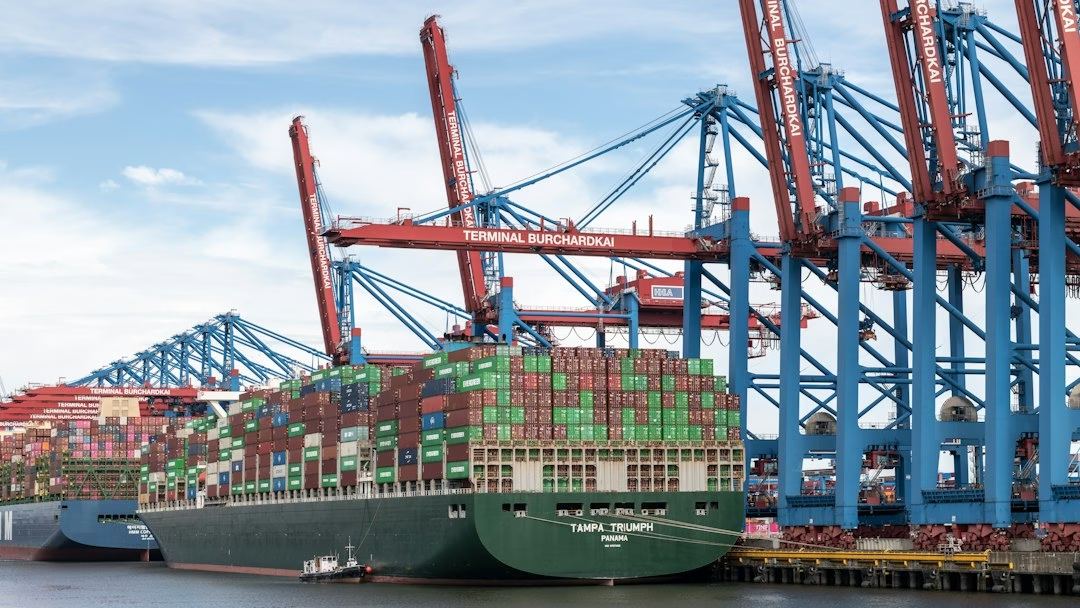
The Maputo corridor shows what this structure looks like at maturity, also with a port as its anchor. The Port of Maputo has been operated since 2003 under a concession held by the Maputo Port Development Company (MPDC), a partnership between Mozambique’s State-owned ports and railways company, CFM, and Portus Indico (Reuters, 2026). The port handles chrome, iron ore, coal and agricultural commodities, much of it from South Africa’s mining belt, and handled a record 32 million tonnes in 2025 (Reuters, 2026).
The railway itself remains with CFM. Its Ressano Garcia line carries more than 90% of the rail traffic on CFM’s southern network, and the African Development Bank (AfDB) has lent USD 40 million to finance rolling stock for it (African Development Bank, 2024). A private port concession handling diversified mineral cargo has given the whole corridor a commercial anchor that no single mine could provide.
That diversification has limits, because a corridor can be diversified by commodity without being diversified by political risk. Post-election protests and road blockades in late 2024 closed the border for several days and pulled the port’s annual volumes below those of the previous year (Lusa, 2025). The corridor reached record volumes the following year, which suggests that diversified traffic absorbs shocks better than a single anchor would. The episode nevertheless shows that risks concentrated on one route cannot be diversified away along that route.
The Walvis Bay corridors in Namibia present the opposite sequencing problem: freight diversity exists, but the railway does not yet reach it. Cargo moving along the corridors rose by 50% between 2022 and 2023, yet rail carries only about a fifth of Namibia’s freight, and the network has no links to Zambia, Angola or Botswana. Copperbelt cargo bound for Walvis Bay travels largely by road. Namibia is rehabilitating its line from Walvis Bay towards Tsumeb with AfDB support, and its Cabinet has approved a feasibility study for an extension that could attract around 1 million tonnes per year of copper, agricultural products, timber and equipment (Railways Africa, 2025).
One million tonnes per year of mixed cargo is valuable as secondary freight but would struggle to finance new track on its own. Botswana iron ore developer Tsodilo Resources has stated that an upgraded Walvis Bay-Tsumeb line would allow it to transport 20 million tonnes per year to Walvis Bay (Walvis Corridor Group, 2025). An anchor makes new track financeable; secondary cargo makes it durable.
An anchor makes new track financeable. Secondary cargo makes it durable.
Competition between corridors must also be considered. Lobito and the Tanzania-Zambia Railway (TAZARA) compete for the same Copperbelt minerals, and the upgrade of TAZARA by China Civil Engineering Construction Corporation (CCECC) aims to raise its annual freight volumes from approximately 200,000 tonnes to 2.4 million tonnes (Caixin, 2025). A shipper that can choose between the two routes is better protected, but neither railway can count on that shipper’s loyalty.
Each corridor must therefore de-risk itself through its own secondary freight, namely fertiliser, fuel and machinery for the mines, and agricultural and consumer goods for the towns along the line, which the competing route cannot capture. Forecasts should treat Copperbelt metals as tonnage shared between corridors, and corridor-specific freight as the base that keeps each line bankable.
Simandou shows where this logic leads for a new line. Its two anchors, Rio Tinto’s SimFer joint venture and Winning Consortium Simandou, reduce demand risk, but both mine iron ore, which leaves the railway exposed to a single commodity price. Opening the line to other users on clear third-party access terms (Samb, 2023) would diversify the commodity base without weakening the anchors’ position. Where risk is split in this way, a corridor can carry debt that no single shipper could support. Where risk is merely shifted, the consequences follow recognisable patterns.
Six Ways Risk Gets Shifted
Rail projects in emerging and frontier markets tend to fail, or survive at a cost, in six recurring ways. In the first four, risk was shifted onto a party that could not carry it. The last two are structures that worked, at a price that someone had to pay.
VIEW THE SIX PATTERNS AT A GLANCE
| Pattern | Case | Where demand risk sat | Outcome |
| Single anchor | Nacala corridor, Mozambique | One coal mine and its owner | Sold with the mine for USD 270 million; still tied to one anchor |
| Two public entities | Mombasa–Nairobi SGR, Kenya | KPA, a State entity, on behalf of KRC | Volume shortfall; KRC default on on-lent loans |
| User-pays on thin traffic | Kenya–Uganda line (RVR) | The concessionaire | Terminated in 2017; lenders faced losses of around USD 164 million |
| Deferred maintenance | Camrail, Cameroon | Deferred into asset condition | Eséka derailment in 2016; concession review ordered |
| State guarantee | Gautrain, South Africa | Gauteng provincial budget | Bankable and operating; ZAR 2.79 billion paid in 2024 |
| Renegotiation | Sitarail, Côte d’Ivoire and Burkina Faso | Shared and rebalanced between the parties | Concession survived the 2003 border closure |
1. Single anchor
Placing demand risk on a single anchor strengthens a railway’s bankability but ties it to that shipper’s strategy. In 2017, Mitsui completed the acquisition, for approximately USD 690 million, of a 15% stake in Vale’s Moatize coal mine and half of Vale’s interest in the Nacala rail and port corridor (Coal Age, 2021; NS Energy, 2021). Vale recorded a substantial impairment on Moatize in 2019 and later decided to exit coal altogether. In 2021, Mitsui agreed to transfer its stakes to Vale for a nominal USD 1, and Vale sold the mine and the corridor together to Vulcan Resources, part of India’s Jindal Group, for USD 270 million (Coal Age, 2021; Northern Miner, 2021). The railway survived, but it remains tied to one mine under a new owner. The risk that materialised was a strategic decision by the anchor which lenders cannot price as they would a default, and which no clause in a rail contract can hedge.
2. Two public entities on one balance sheet
When risk is moved from one public balance sheet to another and presented as transferred, the State’s exposure is unchanged. Kenya financed the USD 3.6 billion Mombasa-Nairobi standard gauge railway (SGR) with Chinese debt and supported repayment with a take-or-pay agreement, under which the Kenya Ports Authority (KPA) committed to supply minimum cargo volumes to Kenya Railways Corporation (KRC). In 2020 the line carried 4.4 million tonnes against a commitment of 6.0 million tonnes, leaving KPA liable for the shortfall (Omondi, 2022).
Kenya’s Auditor-General has described the arrangement as making KPA the guarantor of minimum traffic, and has since found that KPA’s retention of railway revenue contributed to KRC defaulting on its on-lent loans, a default that risks shifting the debt back to the national government (Thiong’o, 2025). Take-or-pay shifts demand risk only when the payer is independent of the borrower. In Kenya, the guarantor, the borrower and the ultimate obligor all sat on the same public balance sheet.
3. Unbankable user-pays concessions
Under a user-pays concession on thin and contested traffic, revenue barely covers operations and leaves little for track renewal. Rift Valley Railways (RVR) signed a 25-year concession for the Kenya-Uganda line in 2006, and Kenya terminated it on 31 July 2017 over missed freight targets, poor maintenance of the conceded assets and KES 600 million in unpaid concession fees (Otuki, 2017; The EastAfrican, 2017).
The concessionaire had been unable to secure further financing from its lenders (People Daily, 2024). Because that debt was non-sovereign, the lenders, a group that included development finance institutions, faced losses of around USD 164 million with no claim against the government (The EastAfrican, 2017). Senegal and Mali terminated Transrail’s concession on the Dakar–Bamako line in December 2015 after a similar decline (Railway Gazette International, 2016). Step-in rights protect lenders only when the asset generates enough cash to make stepping in worthwhile.
4. Deferred maintenance
Risk can also be deferred into maintenance, the obligation that is easiest to postpone and most expensive to neglect. Camrail has operated Cameroon’s railway under a concession since 1999. In October 2016, a passenger train derailed at Eséka, killing 79 people. A government inquiry found Camrail mainly responsible, citing excessive speed, overloading and defective brakes, and the President ordered a review of the concession (Reuters, 2017).
Under a user-pays model, every franc not spent on maintenance improves near-term cash flow, so the incentive to defer is embedded in the structure. The World Bank notes that investors and lenders can be uneasy when safety is supervised by the same body that signs the concession, and recommends an independent safety regulator (World Bank, 2017). For lenders, a safety failure carries termination risk as well as operating risk.
5. State guarantees
A State guarantee can remove demand risk from the concessionaire altogether. Under the Gautrain concession in Gauteng, the provincial government underwrote ridership through a patronage guarantee (Leshoro, 2026). The guarantee delivered a bankable, operating railway, but its cost fell on the provincial budget, which paid ZAR 2.37 billion under it in 2023 and ZAR 2.79 billion in 2024 (Mkentane, 2024). A new 15-year concession was awarded to Sihamba Sonke Mobility in 2026, with Standard Bank underwriting the full debt package for a ZAR 9 billion programme of operation, maintenance and upgrades (Engineering News, 2026). A revenue guarantee buys bankability, and the accuracy of the original forecast sets its price.
6. Renegotiation
Long contracts make renegotiation inevitable, and renegotiation can either rescue a concession or end it. In a study of 307 Latin American transport and water concessions, Guasch et al. (2008) found that more than half had been renegotiated, on average 3.5 years after award. Sitarail, which operates the Abidjan-Ouagadougou line, shows renegotiation working. Its freight traffic rose from 500,000 tonnes in 1995 to 1.2 million tonnes in 2002, then fell to 160,000 tonnes in 2003 when the Ivorian crisis closed the border (Agence France-Presse, 2009). The concession survived because both States and the operator renegotiated it, and the revised agreement incentivised Sitarail to maintain strong performance after being allocated the responsibility for maintenance, renewal and operations (Railway Gazette International, 2018b).
Extended negotiation now characterises the largest current transactions. Where Kenya borrowed to build its railway, Tanzania and Zambia have concessioned TAZARA to a Chinese contractor investing its own capital. The concession and a government support agreement were signed in September 2025 after 17 rounds of negotiation (Caixin, 2025), and CCECC will invest USD 1.4 billion over a 30-year term that begins with three years of rehabilitation (TanzaniaInvest, 2025).
Lobito’s concession agreements were likewise renegotiated as part of its financing (VdA, 2026). Renegotiation is best treated as a feature to be designed. Contracts that set out clear triggers and rebalancing rules in advance allow the parties to absorb shocks without reopening the entire allocation of risk.
Making Rail Projects Bankable: Implications for Sponsors and Lenders
Across these cases, rail projects in emerging and frontier markets succeed when risk is split and fail when it is simply shifted: onto a single anchor, onto a State entity paying itself, onto a forecast that no party underwrites, or into maintenance that is quietly deferred. Corridors are the most effective way to split demand risk, because they give lenders several independent sources of revenue and reduce the share that must ultimately fall on the State.
For sponsors, this means securing an anchor that makes the track financeable, originating the secondary freight that makes it durable, and writing renegotiation triggers into the contract from the outset. For lenders, it means looking beyond the concession agreement to the parties that actually stand behind the revenue, and asking how many of them there are and how credible each one is.
Bankability Checklist: Six Questions Lenders Will Ask
Sponsors can test a rail concession against the questions lenders will ask before committing long-tenor debt. Select each question for the issues behind it. The same questions apply to other revenue-dependent infrastructure, as our analysis of data centre project finance and bankability shows. For the delivery side of rail development, see our article on rail project management in Africa.
1. Who stands behind the revenue?
2. How concentrated is the traffic?
3. Which tonnage is contestable?
4. Who has underwritten the forecast?
5. Is maintenance ring-fenced?
6. How will the contract be rebalanced?
References
- African Development Bank. (2024, February 2). Mozambique: African Development Bank lends $40 million to the Mozambique Rail and Port Authority to buy rolling stock for the Ressano Garcia railway line. AllAfrica. https://allafrica.com/stories/202402050509.html
- Australian Resources & Investment. (2025, October 17). First ore moves at Rio Tinto’s Simandou project. https://www.australianresourcesandinvestment.com.au/2025/10/17/first-ore-moves-at-rio-tintos-simandou-project/
- Caixin. (2025, November 22). China kicks off major upgrade for historic Tanzania-Zambia railway. https://www.caixinglobal.com/2025-11-22/china-tanzania-and-zambia-launch-major-overhaul-of-tanzania-zambia-railway-102385700.html
- China Daily. (2016, December 24). China’s first PPP financed high-speed railway starts construction. https://www.chinadaily.com.cn/business/2016-12/24/content_27764199.htm
- Coal Age. (2021). Vale sells Moatize to Vulcan. https://coalage.com/breaking-news/vale-sells-moatize-to-vulcan
- CRISIL Ratings. (2025, February 13). Rating rationale: Dedicated Freight Corridor Corporation of India Limited. https://dfccil.com/images/uploads/img/CRISIL-Credit-Rating-Rationale-dt-13.02.2025_B3J5.pdf
- Engineering News. (2026, October 12). Standard Bank underwrites Gautrain debt package. https://engineeringnews.co.za/article/standard-bank-underwrites-gautrain-debt-package-2026-10-12
- Global Trade Review. (2026). Lobito Corridor financing reaches financial close; AFC reveals advisory role. https://www.gtreview.com/news/africa/lobito-corridor-financing-reaches-financial-close-afc-reveals-advisory-role/
- Guasch, J. L., Laffont, J.-J., & Straub, S. (2008). Renegotiation of concession contracts in Latin America: Evidence from the water and transport sectors. International Journal of Industrial Organization, 26(2), 421–442.
- ICRA. (2025). Dedicated Freight Corridor Corporation of India Limited: Rating reaffirmed. https://www.icra.in/Rating/GetRationalReportFilePdf?id=140001
- IJGlobal. (2014, March 6). Middle Eastern Transport Deal of the Year 2013: Etihad Rail. https://www.ijglobal.com/articles/127433/middle-eastern-transport-deal-of-the-year-2013-etihad-rail
- Interfax. (2025, December 16). Agreement signed to fund construction of China-Kyrgyzstan-Uzbekistan railroad. https://interfax.com/newsroom/top-stories/115328/
- International Railway Journal. (2025). Finance secured for Lobito Corridor upgrade in Angola. https://www.railjournal.com/financial/finance-secured-for-lobito-corridor-upgrade-in-angola/
- Leshoro, D. (2026, October 14). Sihamba Sonke Mobility takes over Gautrain operations in new 15-year concession deal. Eyewitness News. https://www.ewn.co.za/2026/10/14/sihamba-sonke-mobility-takes-over-gautrain-operations-in-new-15-year-concession-deal
- Lusa. (2025, January 20). Movimento no porto de Maputo caiu 1% em 2024 devido às manifestações pós-eleitorais. Observador. https://observador.pt/2025/01/20/movimento-no-porto-de-maputo-caiu-1-em-2024-devido-as-manifestacoes-pos-eleitorais/
- MEED. (2026, January 21). Saudi Landbridge rail scheme to be delivered by 2034. https://www.meed.com/saudi-landbridge-rail-scheme-to-be-delivered-by-2034
- Mkentane, L. (2024, October 6). Gautrain a “financial train wreck”, says AA. Business Day. https://www.businessday.co.za/bd/national/2024-10-06-gautrain-a-financial-train-wreck-says-aa/
- Northern Miner. (2021). Vale to sell Moatize coal mine to Vulcan for US$270M. https://www.northernminer.com/fast-news/vale-to-sell-moatize-coal-mine-to-vulcan-for-us270m/1003837489/
- NS Energy. (2021). Moatize coal mine, Tete Province. https://www.nsenergybusiness.com/?p=287842
- Omondi, D. (2022). State falls short of cargo volumes in SGR loan terms. The Standard. https://www.standardmedia.co.ke/article/2001460254/state-falls-short-of-cargo-volumes-in-sgr-loan-terms
- Otuki, N. (2017, August 1). RVR finally loses its 25-year railway contract. Business Daily. https://www.businessdailyafrica.com/bd/news/rvr-finally-loses-its-25-year-railway-contract–2163318
- People Daily. (2024, March 4). Kenya’s defence in Sh300b London railway suit starts. https://peopledaily.digital/news/kenyas-defence-in-sh300b-london-railway-suit-starts
- Railway Gazette International. (2016). New operator for Dakar–Bamako railway. https://railwaygazette.com/freight/new-operator-for-dakar-bamako-railway/42259.article
- Railway Gazette International. (2018a). Financing agreed for high speed line PPP. https://www.railwaygazette.com/asia/financing-agreed-for-high-speed-line-ppp/48486.article
- Railway Gazette International. (2018b). Locomotives arrive in Abidjan. https://railwaygazette.com/traction-and-rolling-stock/locomotives-arrive-in-abidjan/46343.article
- Reuters. (2017, May). Camrail “mainly to blame” for Cameroon train crash that killed 79: Inquiry. https://uk.news.yahoo.com/camrail-apos-mainly-blame-apos-220110971.html
- Reuters. (2026, January 13). Mozambique’s Maputo port volumes hit record 32 mln metric tons. Zawya. https://www.zawya.com/en/economy/africa/mozambiques-maputo-port-volumes-hit-record-32mln-metric-tons-m5uhd28u
- TanzaniaInvest. (2025). TAZARA railway to receive USD 1.4 billion investment from China for revitalization. https://tanzaniainvest.com/?p=29863
- The EastAfrican. (2017, August 9). RVR lenders stare at $164m in losses. https://www.theeastafrican.co.ke/tea/business/rvr-lenders-stare-at-164m-in-losses-1371246
- Thiong’o, J. (2025, November 5). KRC defaults on six-year Sh569b SGR loan, Auditor General reveals. The Standard. https://www.standardmedia.co.ke/national/article/2001533489/krc-defaults-on-six-year-sh569b-sgr-loan-auditor-general-reveals
- VdA. (2026). VdA and PRIME Advogados advise on successful closing of the project financing of the Lobito Corridor. https://www.vda.pt/en/media/news-and-media/vda-and-prime-advogados-advise-on-successful-closing-of-the-project-financing-of-the-lobito/28636/
- World Bank. (2017). Railway reform: Toolkit for improving rail sector performance (2nd ed.). World Bank.